Sleet
Real-time logistics and shipment tracking platform
#problem
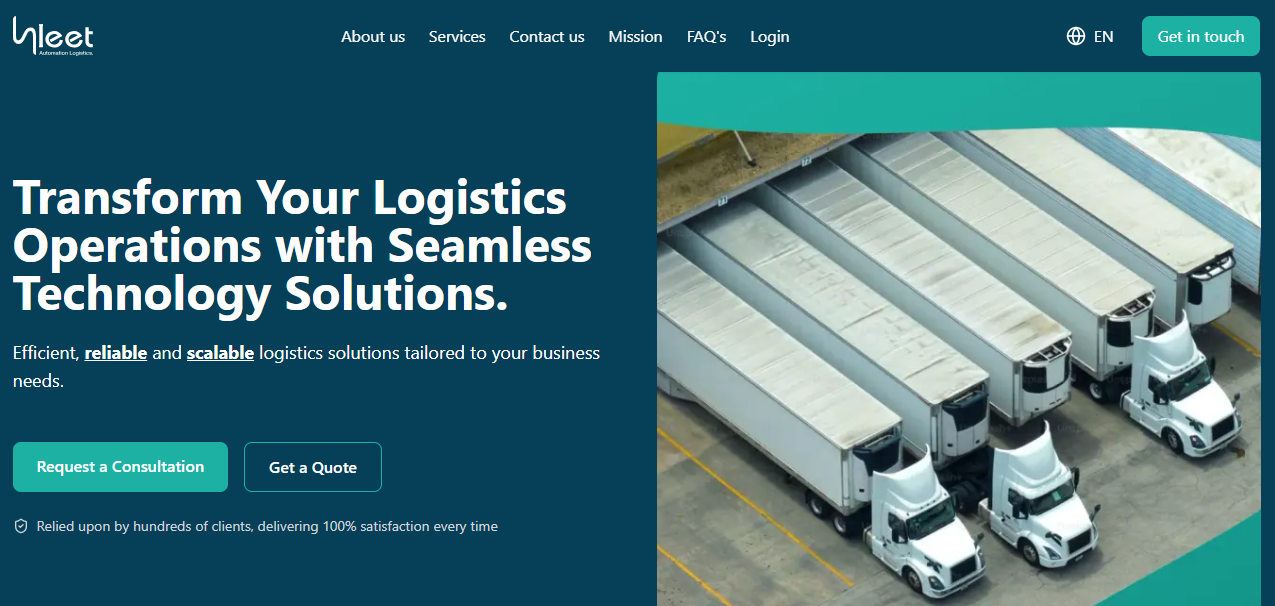
Sleet is a logistics management platform that gives operators a single, real-time view of shipments as they move through the supply chain. It addresses the visibility gap in logistics, where shipment status and location are fragmented across systems, by centralizing tracking and operational data into one application. I built the platform end to end, from the Nest.js API and data model through the Next.js interface and AWS deployment.
#what-i-built
I architected the Sleet platform end to end, owning the Nest.js backend, the Next.js frontend, the Supabase data layer, and the AWS deployment.
I designed and built the Nest.js backend that powers the real-time shipment tracking engine and exposes the logistics APIs consumed by the frontend.
I modeled the logistics and shipment data in Supabase and used its real-time capabilities to push live tracking updates to connected clients.
I developed the Next.js frontend that presents shipment status and supply chain operations to users in a single interface.
I deployed and operated the platform on AWS, managing the cloud infrastructure that hosts the Nest.js services and Next.js application.
#stack
#outcome
Production real-time logistics SaaS platform live at sleet.sa: end-to-end ownership across the Nest.js real-time tracking engine, Next.js operational interface, Supabase data layer, and AWS infrastructure.
#key-decisions
Chose Supabase for its native real-time subscriptions, allowing the tracking engine to push live shipment updates to connected clients without building custom WebSocket infrastructure.
Used Nest.js for the backend API to enforce modular domain separation: tracking, routing, and status services are independently maintainable and deployable.
Deployed on AWS to give the operator full data residency control and infrastructure ownership rather than locking into a third-party SaaS-hosted backend.
Designed the data model around shipment events rather than state snapshots, preserving a full audit trail of every status transition across the supply chain.
Building something similar?
Let's talk about your project. No obligation.